

PCOS and Pregnancy: Risks, Monitoring and What to Expect
A positive pregnancy test can bring both excitement and uncertainty for women with polycystic ovarian syndrome. After concerns about conception, attention often shifts to whether PCOS could affect the pregnancy, increase the risk of miscarriage or mean that additional medical care is needed.
Most women with PCOS can have healthy pregnancies. However, the condition is associated with a higher likelihood of certain complications, including gestational diabetes, high blood pressure, pre-eclampsia and preterm birth.
Individual risk factors should be assessed to determine whether additional monitoring is appropriate.
Early pregnancy care can help identify potential concerns and establish an appropriate monitoring plan. The care required will depend on the patient’s complete medical history rather than the PCOS diagnosis alone.
Women who are still trying to conceive can find further information in our guide, Can You Get Pregnant with PCOS? Fertility and Treatment Options.
Is a Pregnancy with PCOS Considered High Risk?
PCOS does not automatically mean that every pregnancy will be classified as high risk.
The term “high-risk pregnancy” generally refers to a pregnancy in which a medical, obstetric or personal factor increases the likelihood of complications. PCOS may contribute to this assessment, but it will be considered alongside factors such as:
- Age
- Blood pressure and blood glucose
- Body mass index
- Previous pregnancy complications
- Multiple pregnancy
- Existing medical conditions
- The method of conception
Some women with PCOS will follow a standard antenatal care schedule, while others may be offered earlier testing or specialist input.
Does PCOS Increase the Risk of Miscarriage?
Research has found an association between PCOS and an increased likelihood of miscarriage. However, the relationship is complex, and a diagnosis of polycystic ovarian syndrome cannot predict the outcome of an individual pregnancy.
Factors that may influence miscarriage risk include:
- Maternal age
- Chromosomal abnormalities
- Blood glucose regulation
- Insulin resistance
- Other hormonal conditions
- Previous pregnancy history
- Fertility treatment
- Conditions affecting the uterus
Some of these factors are more common in women with PCOS, but they are not caused exclusively by the condition. It can therefore be difficult to separate the direct effect of PCOS from related metabolic and reproductive factors.
A previous miscarriage does not mean that another pregnancy will end in the same way. Many pregnancy losses are caused by chromosomal changes that occur by chance and could not have been prevented through ordinary daily activities.
Women with PCOS should contact a healthcare professional after receiving a positive pregnancy test, particularly if they take regular medication or have diabetes, high blood pressure or a history of pregnancy complications.
No medicine or supplement can guarantee that miscarriage will be prevented. Treatment should be prescribed for a clear medical reason rather than taken routinely because a woman has PCOS.
Why Can PCOS Affect Pregnancy Risk?

PCOS is both a reproductive and metabolic condition. Although it is often discussed in relation to irregular periods and fertility, it can also affect how the body responds to insulin and regulates blood glucose.
Insulin resistance means that the body’s cells do not respond to insulin as effectively as expected. The pancreas may compensate by producing more insulin. During pregnancy, hormonal changes naturally make the body more resistant to insulin, so an existing tendency towards insulin resistance may become more significant.
PCOS is also associated with a higher likelihood of type 2 diabetes and high blood pressure, which may influence pregnancy health. However, not every woman with PCOS has insulin resistance or metabolic concerns, so individual assessment remains important.
PCOS and Gestational Diabetes
Gestational diabetes is high blood glucose that develops during pregnancy. It usually occurs when the body cannot produce enough insulin to meet the increased demands of pregnancy.
Women with PCOS have a higher likelihood of developing gestational diabetes, particularly when insulin resistance or abnormal glucose regulation was present before conception.
Gestational diabetes often causes no noticeable symptoms, so testing remains important even when the patient feels well. Depending on the patient’s health history and local maternity protocol, glucose testing may be offered earlier than usual or repeated later in pregnancy.
The clinician may consider:
- Previous blood glucose results
- A history of gestational diabetes
- A family history of diabetes
- Body mass index
- Previous pregnancy outcomes
- Other signs of insulin resistance
When gestational diabetes is identified and managed appropriately, the likelihood of related complications can be reduced. Management may include blood glucose monitoring, nutritional guidance, suitable physical activity and medication when required.
Gestational diabetes is influenced by pregnancy hormones, genetics, insulin response and existing health factors, rather than diet alone.
High Blood Pressure and Pre-Eclampsia
Women with PCOS have a higher likelihood of developing high blood pressure during pregnancy and pre-eclampsia.
Pre-eclampsia is a pregnancy complication involving high blood pressure and signs that other organs, commonly the kidneys or liver, may be affected. It usually develops after 20 weeks of pregnancy, although its timing and severity can vary.
Routine antenatal appointments include blood pressure checks and urine testing partly to identify possible signs of pre-eclampsia. Additional blood tests, scans or specialist reviews may be recommended if concerns arise.
A healthcare professional should be contacted promptly if symptoms such as a severe headache, visual disturbance, sudden swelling, pain below the ribs or a marked change in wellbeing develop during pregnancy. These symptoms can have several causes, but they require medical assessment.
Some pregnant women are advised to take low-dose aspirin to reduce their risk of pre-eclampsia. This decision is based on a combination of recognised risk factors. PCOS alone does not mean that aspirin is automatically required, and it should only be started on the advice of the clinician responsible for the pregnancy.
Can PCOS Increase the Risk of Preterm Birth?
Preterm birth refers to a baby being born before 37 completed weeks of pregnancy.
Research has reported a higher incidence of preterm birth among women with PCOS. However, related factors such as high blood pressure, gestational diabetes, fertility treatment and multiple pregnancy may also contribute.
An increased statistical risk does not mean that early birth is expected. The maternity team will consider the complete pregnancy history when deciding whether additional monitoring is needed.
Can PCOS Affect the Baby?

Most babies born to women with PCOS are healthy.
Research has identified associations between maternal PCOS and certain neonatal outcomes, but these findings can be influenced by other factors. Gestational diabetes, high blood pressure, maternal age, fertility treatment, multiple pregnancy and preterm birth may all affect a baby’s health independently of PCOS.
PCOS alone cannot predict whether a baby will experience health problems. Attending antenatal appointments and completing recommended tests can help ensure appropriate care.
What Monitoring May Be Recommended During Pregnancy?
There is no single monitoring schedule for every pregnant woman with PCOS.
The plan should reflect individual risk factors, previous pregnancy history and the results of early assessments.
Care may include:
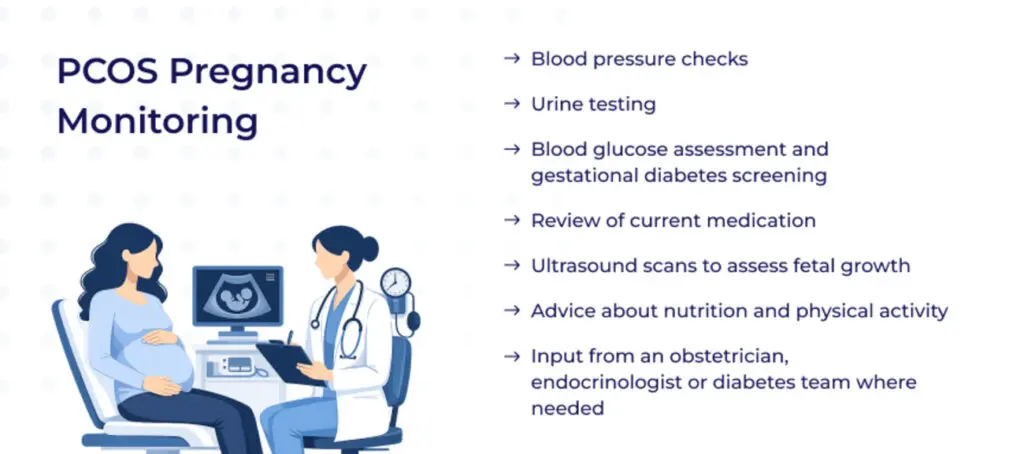
Some women may be advised to have glucose testing early in pregnancy, particularly if they have known insulin resistance, previous gestational diabetes or abnormal blood glucose results. Testing may still be repeated later because glucose regulation can change as pregnancy progresses.
Additional fetal growth scans are not required for every patient with PCOS. They may be recommended when another concern is present, such as diabetes, high blood pressure or a previous growth-related pregnancy complication.
What Happens to PCOS Medicines During Pregnancy?
Medicines used before conception should be reviewed once pregnancy is confirmed, or ideally during preconception planning.
Some treatments used for acne, unwanted hair growth, weight management or fertility should not be continued during pregnancy. Others may remain appropriate in selected circumstances.
Patients should not stop prescribed medication without medical advice. Abruptly stopping treatment for diabetes, high blood pressure, thyroid disease or another condition may create additional risks.
Metformin During Pregnancy
Metformin is sometimes used before conception in women with PCOS, particularly when insulin resistance or abnormal glucose regulation is present.
Whether it should be continued during pregnancy depends on why it was prescribed and the patient’s individual circumstances.
The international PCOS guideline does not recommend the routine use of metformin during pregnancy for all women with PCOS. Evidence does not show that it prevents miscarriage, gestational diabetes, hypertension or pre-eclampsia in every patient.
A clinician should review the potential benefits, uncertainties and alternatives before making a recommendation.
Supplements and Herbal Products
Supplements marketed for PCOS, fertility or pregnancy are widely available, but the evidence and quality can vary.
Women should tell their clinician about every supplement they take, including herbal and “natural” products. Some ingredients may be unsuitable during pregnancy, interact with medication or provide unnecessary amounts of certain nutrients.
Folic acid and vitamin D may be recommended during pregnancy, but the appropriate dose depends on UK guidance and individual risk factors. A clinician or pharmacist can confirm what is suitable.
How Can You Prepare for Pregnancy with PCOS?
Preparation is most useful before conception, but several practical steps remain important after pregnancy has been confirmed.
Review General Health and Medication
Blood pressure, blood glucose, thyroid health and current medication should be reviewed so that any necessary changes can be made safely.
Follow Sustainable Health Advice

Balanced nutrition, appropriate physical activity, sufficient sleep and avoiding smoking can support pregnancy health.
Pregnancy is not an appropriate time for extreme dieting, restrictive eating or unsupervised attempts to lose weight. Advice should focus on adequate nutrition and individual health requirements.
Attend Antenatal Appointments
Attend all recommended antenatal appointments and complete any tests advised by the maternity team.
Patients may find it helpful to ask:
- Will glucose testing be offered earlier?
- Are any current medicines unsuitable during pregnancy?
- Is additional blood pressure monitoring recommended?
- Will extra ultrasound scans be needed?
- Which symptoms require urgent medical advice?
- Which specialist will oversee hormonal or metabolic concerns?
Understanding the monitoring plan can reduce uncertainty and explain why particular tests have been recommended.
When Should You Seek Specialist Advice?
Specialist advice may be particularly helpful when a pregnant woman with PCOS also has:
- Diabetes or prediabetes
- High blood pressure
- Previous gestational diabetes or pre-eclampsia
- Recurrent pregnancy loss or previous preterm birth
- Thyroid disease
- Multiple pregnancy
- Complex medication needs
- Significant hormonal or metabolic symptoms
The appropriate specialist may be a gynaecologist, obstetrician, endocrinologist, diabetes physician or maternal medicine team, depending on the concern.
Because PCOS can affect both reproductive and metabolic health, coordinated care between specialists may be helpful when other medical conditions are present.
PCOS Pregnancy Support at London Lauriston Clinic
Most women with PCOS can have healthy pregnancies, but an early assessment can help determine whether additional monitoring or specialist advice may be appropriate. Care should consider blood pressure, glucose regulation, previous pregnancy history and wider health.
London Lauriston Clinic is a private health clinic in London offering specialist assessment across gynaecology, diabetes and endocrinology. Its gynaecology department manages a range of women’s health conditions, including polycystic ovarian syndrome, while its endocrinology services support patients with associated hormonal or metabolic concerns.
London Lauriston Clinic offers individual reviews for women who are planning a pregnancy, have recently received a positive pregnancy test or need advice about PCOS-related concerns. Recommendations are based on each patient’s medical history, symptoms and stage of pregnancy.
To arrange a consultation at London Lauriston Clinic, email info@llclinics.co.uk or get in touch through the clinic’s website contact form.