

Can You Get Pregnant with PMOS? Fertility and Treatment Options
Polyendocrine metabolic ovarian syndrome, commonly known as PMOS (previously know as polycystic ovary syndrome, PCOS), is one of the most common conditions affecting female fertility. For many women, receiving a diagnosis brings an immediate question: will it still be possible to become pregnant?
The answer is often reassuring. PMOS can make conception more difficult, particularly when it affects ovulation, but it does not mean that pregnancy is impossible. Many women with PMOS conceive naturally, while others become pregnant with treatment that helps restore or stimulate ovulation.
The impact of PMOS on fertility varies from person to person. Some women continue to ovulate regularly, while others have long, unpredictable cycles or may not ovulate for several months. Age, general health and other reproductive factors also influence the chances of conception.
Understanding how PMOS affects ovulation, when to seek medical advice and which treatments may be considered can make fertility planning clearer and more manageable.
How Does PMOS Affect Fertility?
PMOS is a hormonal and metabolic condition that can affect how the ovaries work. It is one of the most common causes of infertility associated with irregular or absent ovulation.
During a typical menstrual cycle, a follicle develops in one of the ovaries and releases a mature egg. This process is known as ovulation. Pregnancy can occur when the egg is fertilised during the fertile window.
In women with polyendocrine metabolic ovarian syndrome, hormonal changes can interfere with the development and release of an egg. Higher androgen levels, changes in reproductive hormone signalling and insulin resistance may all contribute to irregular ovulation.
- Irregular periods
- Cycles longer than 35 days
- Several months without a period
- Difficulty knowing when ovulation occurs
- Fewer opportunities to conceive during the year
PMOS does not always stop ovulation completely. A woman with irregular cycles may still release an egg occasionally. Natural pregnancy is therefore still possible, although conception may take longer because fertile windows occur less frequently and can be harder to predict.
It is also important to distinguish between polycystic ovaries and polyendocrine metabolic ovarian syndrome (formerly know as polycystic ovary syndrome). Multiple follicles on an ultrasound do not determine fertility by themselves. Some women have polycystic-looking ovaries and ovulate regularly, while others have PMOS without the characteristic ultrasound appearance.
Fertility should therefore be assessed using menstrual patterns, symptoms, hormone results and other clinical findings, rather than an ultrasound scan alone.
Can You Get Pregnant Naturally with PMOS?
Yes, many women with PMOS can become pregnant naturally.
Women who continue to ovulate regularly may not experience significant difficulty conceiving. Those who ovulate less often may need more time because there are fewer opportunities for fertilisation. If ovulation is not occurring, treatment may be recommended to stimulate the release of an egg.
The chance of becoming pregnant depends on more than the PMOS diagnosis.
Other relevant factors include:
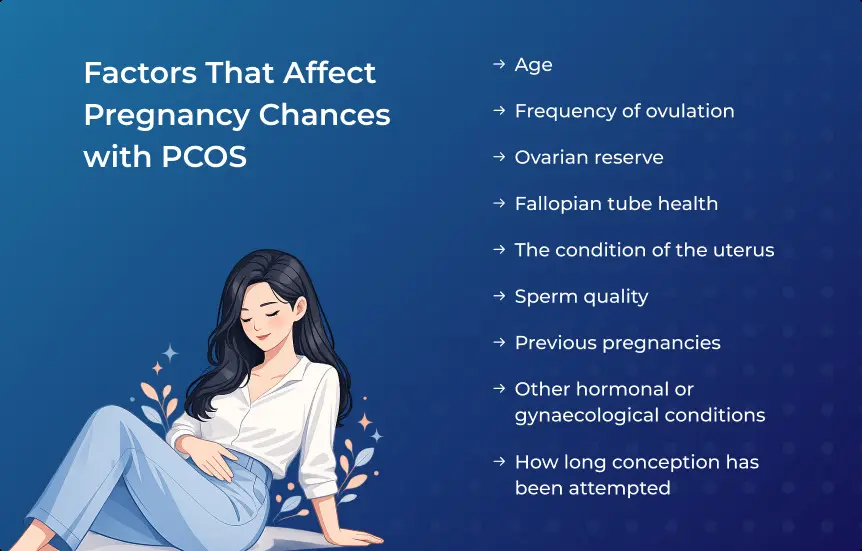
A delay in conception should not automatically be linked to PMOS. Endometriosis, fibroids, thyroid conditions, fallopian tube damage and male fertility factors can also affect the chances of conception.
A fertility assessment may therefore need to consider both partners. Focusing only on ovulation without checking for other possible factors could delay appropriate care.
Can You Track Ovulation When You Have PMOS?
Tracking ovulation can be more difficult when periods are irregular, but keeping a record of menstrual cycles can still provide useful information.
A calendar or cycle-tracking app may help identify patterns. However, these apps estimate ovulation based on previous cycle lengths and cannot confirm that an egg has been released.
Home ovulation tests also have limitations. Many detect a rise in luteinising hormone, or LH, which usually occurs before ovulation. Some women with PMOS have higher or fluctuating LH levels, which can lead to repeated positive or unclear results without confirming ovulation.
Changes in cervical mucus or basal body temperature may offer additional information, but no single home method is completely reliable when cycles are unpredictable.
If it is unclear whether ovulation is occurring, a clinician may recommend blood tests or ultrasound monitoring. These can provide more accurate information than relying only on symptoms, apps or home tests.
When Should You Seek Fertility Advice?

General fertility guidance often recommends seeking medical advice after 12 months of regular unprotected intercourse for women under 35, or after six months for women aged 35 and over.
However, waiting this long may not be appropriate if PMOS has already been diagnosed or periods are very irregular. If ovulation appears to be infrequent or absent, an earlier assessment may help prevent unnecessary delays.
It may be sensible to seek advice sooner if:
- Periods occur less often than every 35 days or stop for several months
- It is unclear whether ovulation is occurring
- The woman is aged 35 or over
- There has been a previous miscarriage or ectopic pregnancy
- Another gynaecological condition is suspected
- There is a history of pelvic infection or surgery
- A male fertility concern is already known
- There are symptoms of diabetes, thyroid disease or another hormonal condition
The purpose of a fertility consultation is to identify possible causes and decide whether monitoring, treatment or further investigation is needed.
What Does a PMOS Fertility Assessment Involve?
A fertility assessment for PMOS should consider reproductive, hormonal and metabolic health together.
The consultation will usually begin with a review of menstrual cycles, including cycle length, skipped periods and changes in bleeding. Previous pregnancies, miscarriages, fertility treatment and current attempts to conceive are also relevant.
The clinician may ask about PMOS symptoms such as acne, increased facial or body hair, scalp hair thinning and changes in weight. Current medicines, supplements and existing health conditions should also be reviewed.
Depending on the patient’s circumstances, investigations may include:
- Blood tests to assess reproductive hormones
- Tests of androgen levels
- Thyroid function testing
- Prolactin testing
- Blood glucose or long-term glucose control testing
- Cholesterol and other blood lipid tests
- Pelvic ultrasound
- Tests to assess whether ovulation is occurring
If pregnancy has not occurred, further investigations may include an assessment of the fallopian tubes and a semen analysis for the male partner.
The recommended tests will depend on the patient’s symptoms, medical history, age and how long they have been trying to conceive.
Women with very infrequent periods should also seek advice even if they are not currently trying to conceive. Long gaps between periods can mean that the lining of the womb is not shed regularly, which may require separate management.
What Can Improve the Chances of Conception with PMOS?

There is no single fertility plan that suits every woman with PMOS. The most appropriate approach will depend on ovulation, metabolic health, age, symptoms and reproductive goals.
Arrange a Preconception Health Review
A preconception review can identify factors that may affect fertility or pregnancy. This may include checking blood pressure, blood glucose, nutrition, medication and conditions such as diabetes or thyroid disease.
Folic acid should also be discussed, as the recommended dose may vary depending on medical history and other risk factors.
Review Medicines and Supplements
Some medicines used for acne, excess hair growth or weight management may not be suitable while trying to conceive or during pregnancy.
Do not stop prescribed medication without medical advice. A treatment may need to be stopped, replaced or continued under supervision.
Supplements marketed for PMOS or fertility should also be discussed with a clinician, as they are not always necessary, effective or suitable.
Support Metabolic Health
Insulin resistance is common in PMOS and can contribute to irregular ovulation.
Regular physical activity, balanced nutrition, sufficient sleep and treatment of related health conditions can support metabolic and reproductive health, even without weight loss.
When weight management is medically appropriate, the approach should be realistic and sustainable. Extreme dieting or excessive exercise may negatively affect general and reproductive health.
Avoid Smoking and Alcohol When Planning Pregnancy
Smoking can reduce fertility and affect pregnancy health. Women who smoke should seek support to stop before trying to conceive.
UK guidance advises that the safest approach for women who are pregnant or planning a pregnancy is not to drink alcohol.
Which Fertility Treatments Are Available for PMOS?
When PMOS affects ovulation, fertility treatment usually focuses on helping an ovary release an egg. The most suitable option will depend on the fertility assessment and whether other factors are affecting conception.
Ovulation Induction
Ovulation induction uses medicine to stimulate the development and release of an egg.
The 2023 international evidence-based guideline recommends letrozole as the first-line treatment for women with PMOS who do not ovulate regularly and have no other identified fertility factors. It has been shown to improve ovulation, pregnancy and live birth outcomes compared with clomifene citrate in this group.
Clomifene citrate may still be considered in some cases. The choice of medicine depends on medical history, previous treatment and specialist advice.
Blood tests or ultrasound scans may be needed to monitor the ovarian response and reduce the risk of complications, including multiple pregnancy. Fertility medicines should only be used under specialist supervision.
Metformin
Metformin helps the body respond more effectively to insulin. It may be used in selected women with PMOS, particularly when insulin resistance or abnormal glucose regulation is present.
For some patients, it can improve menstrual regularity and support ovulation. However, it is not an appropriate fertility treatment for everyone with PMOS.
Gonadotrophin Treatment
Gonadotrophins are injectable hormones that stimulate the ovaries. They may be considered when oral medicines have not been successful or are unsuitable.
Ultrasound monitoring is required because more than one follicle may develop, increasing the chance of multiple pregnancy and, less commonly, ovarian hyperstimulation syndrome.
Ovarian Surgery
Laparoscopic ovarian surgery, sometimes called ovarian drilling, may be considered when ovulation-induction medicines have not been effective or are unsuitable.
The procedure aims to alter ovarian hormone production and encourage ovulation. It is not routinely recommended, and the potential benefits must be weighed against the risks of surgery.
IVF
In vitro fertilisation, or IVF, may be considered when earlier treatment has not resulted in pregnancy or another fertility factor is present, such as fallopian tube damage or a male fertility problem.
Women with PMOS may respond strongly to ovarian stimulation medicines, so treatment requires careful adjustment and monitoring.
IVF is not usually the first treatment for PMOS. Many women conceive naturally or following ovulation induction.
Should You See a Gynaecologist or an Endocrinologist?
PMOS can affect both reproductive and metabolic health, so care may involve more than one specialist.
A gynaecologist can assess irregular periods, ovulation, fertility and other reproductive concerns. This is often the most relevant starting point when trying to conceive or when periods are very infrequent. An endocrinologist may be involved when PMOS is linked to insulin resistance, diabetes risk, thyroid concerns or more complex hormonal symptoms.
Some women benefit from coordinated care between gynaecology, endocrinology and fertility specialists. The best starting point will depend on the main symptoms and reason for seeking advice.
Fertility Support for Women with PMOS

PMOS can make ovulation and conception less predictable, but pregnancy is still possible. Some women conceive naturally, while others benefit from treatment that supports ovulation or addresses another fertility factor.
An individual assessment can confirm whether ovulation is occurring, identify possible barriers to conception and determine whether treatment may be helpful. Women with irregular or absent periods may benefit from seeking advice earlier rather than waiting for the standard infertility timeframe.
London Lauriston Clinic is a private health clinic in London offering specialist consultations and diagnostic assessment. Its gynaecology department manages a range of women’s health conditions, including polyendocrine metabolic ovarian syndrome (PMOS) (polycystic ovarian syndrome, PCOS), menstrual disorders and fertility concerns.
The clinic also provides endocrinology services for patients whose PMOS is associated with hormonal or metabolic concerns, allowing care to be planned around their symptoms, medical history and reproductive goals.
To arrange a consultation about PMOS or fertility at London Lauriston Clinic, email info@llclinics.co.uk.