

Thyroid Disease in Women: Symptoms Across Life Stages
Thyroid disease can affect women at any age, but the way it presents and the care it requires can change across different stages of life.
This matters because many symptoms of thyroid dysfunction are easily attributed to other changes occurring at the same time.
Fatigue in a young woman may be blamed on a demanding schedule. Irregular periods may be considered a gynaecological issue. Palpitations and sleep disturbance during midlife may be assumed to be part of menopause. After childbirth, exhaustion and mood changes may seem like an expected part of recovery.
In some cases, however, thyroid dysfunction may be contributing to these symptoms.
Understanding how different stages of life can influence thyroid health can make it easier to recognise when symptoms may need further assessment.
Thyroid Health Through Different Life Stages
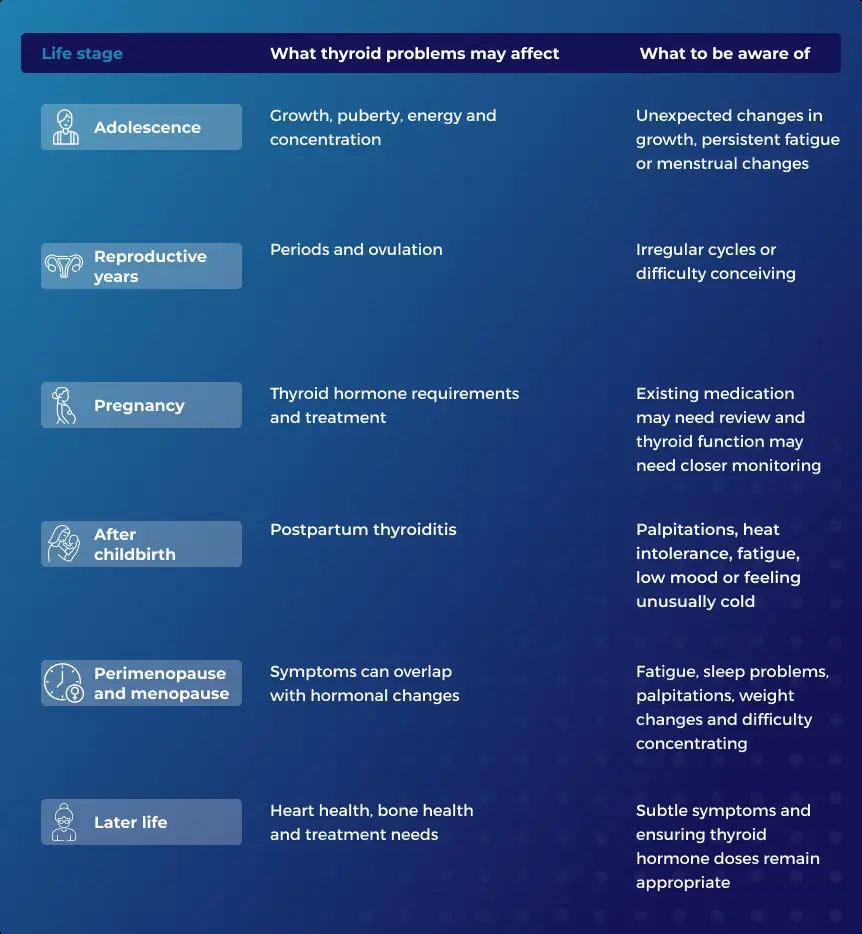
Why Are Thyroid Problems More Common in Women?
Women are more likely than men to develop thyroid disorders, particularly autoimmune conditions such as Hashimoto’s disease and Graves’ disease. The reasons for this difference are complex and are thought to involve a combination of immune, genetic and hormonal factors rather than one single cause.
The thyroid is a small gland in the neck that produces hormones involved in metabolism, heart rate, body temperature and many other functions. When it produces too little thyroid hormone, this is known as hypothyroidism. When it produces too much, it is called hyperthyroidism.
Hormonal life stages do not automatically cause thyroid disease, but they can influence how symptoms appear, how thyroid function is interpreted and how an existing condition is managed. This is one reason thyroid problems may become particularly noticeable around menstruation, pregnancy, the postnatal period and menopause.
How Can Thyroid Disease Affect Adolescence and Early Adulthood?

During adolescence and early adulthood, thyroid dysfunction can affect growth, puberty, energy levels, concentration and menstrual patterns.
Thyroid hormones play an important role in normal growth and development, so significant thyroid dysfunction during adolescence can interfere with growth or the timing of puberty. Menstrual changes may also occur, particularly as women enter their reproductive years.
Other symptoms can be less specific. Persistent tiredness, difficulty concentrating, changes in mood or unexpected changes in weight may have many possible causes, particularly during school, university or the transition into working life.
Thyroid disease should not be assumed from these symptoms alone. However, further assessment may be appropriate when several symptoms occur together, persist without a clear explanation, or are accompanied by risk factors such as a family history of thyroid disease, type 1 diabetes or another autoimmune condition.
Can Thyroid Disease Affect Periods and Fertility?
Thyroid dysfunction can interfere with menstrual regularity and ovulation, which means thyroid health may become particularly relevant for women experiencing persistent cycle changes or difficulty conceiving.
Thyroid hormones are closely connected with the hormones that regulate ovulation and the menstrual cycle. When thyroid hormone levels are significantly too high or too low, periods can become irregular. Hypothyroidism is often associated with heavier menstrual bleeding, while hyperthyroidism can lead to lighter or less frequent periods.
Changes in thyroid function may also affect ovulation. For some women, this can make becoming pregnant more difficult.
This is one reason thyroid function may be considered as part of a broader assessment when a woman is experiencing unexplained menstrual irregularity or fertility difficulties. These problems can have many possible causes, however, and may also require consideration of other endocrine conditions or gynaecological causes.
Women who already have a thyroid diagnosis and are considering pregnancy should discuss their plans with the clinician managing their condition. Treatment that has been suitable outside pregnancy may require closer monitoring once pregnancy is planned or confirmed.
What Should Women Know About Thyroid Disease During Pregnancy?

Pregnancy changes the body’s thyroid hormone requirements, which can affect both thyroid function and the treatment of an existing thyroid condition.
Thyroid hormones are particularly important during early foetal development, and pregnancy also changes how thyroid blood test results are interpreted.
For women taking levothyroxine for hypothyroidism, the required dose may change during pregnancy. Women with hyperthyroidism may also need treatment to be reviewed depending on the cause and severity of the condition.
Poorly controlled thyroid disease during pregnancy can increase the risk of complications. Untreated hypothyroidism, for example, has been associated with miscarriage, premature birth and pre-eclampsia. With appropriate monitoring and treatment, however, most women with thyroid disease can have a healthy pregnancy.
Women with an existing thyroid condition should discuss pregnancy plans with the clinician managing their care where possible and inform their healthcare team once pregnancy is confirmed. Medication should not be started, stopped or adjusted without medical advice.
Can Thyroid Problems Develop After Having a Baby?
Thyroid dysfunction can first appear after childbirth, and the resulting symptoms may be difficult to distinguish from normal postnatal changes.
Postpartum thyroiditis is inflammation of the thyroid that can develop within the first year after giving birth.
Its course can vary. Some women initially experience a period of excessive thyroid hormone release, which may cause symptoms such as palpitations, heat intolerance, irritability or anxiety. This can then be followed by a hypothyroid phase, when tiredness, low mood, constipation, feeling cold and difficulties concentrating may become more prominent.
Not every woman experiences both phases.
The difficulty is that many of these symptoms are also common during the postnatal period. Lack of sleep, emotional changes, physical recovery and the demands of caring for a baby can make thyroid dysfunction less obvious.
If symptoms persist, become more noticeable or seem difficult to explain as part of normal postnatal recovery, it may be worth discussing thyroid testing with a doctor.
Many women recover normal thyroid function, although some develop persistent hypothyroidism and require ongoing follow-up. A previous episode of postpartum thyroiditis can also be relevant to future pregnancies and should be mentioned to the healthcare team.
How Can Thyroid Disease Overlap With Perimenopause and Menopause?

Thyroid dysfunction and menopause can cause some of the same symptoms, including fatigue, changes in weight, sleep problems, palpitations, mood changes and difficulty concentrating.
Because of this overlap, new symptoms in midlife should not automatically be attributed either to menopause or to an existing thyroid condition. A woman with a known thyroid disorder may assume that her medication needs adjusting, while someone without a diagnosis may assume that all new symptoms are simply part of menopause.
Thyroid testing is not automatically required simply because a woman reaches perimenopause or menopause. Instead, it should be guided by the overall clinical picture, including the combination and persistence of symptoms, medical history and other relevant health factors.
Where symptoms are difficult to explain or do not fit the expected pattern, further assessment can help determine whether thyroid dysfunction, menopause, both conditions or another cause may be involved.
How Can Thyroid Disease Affect Women Later in Life?
In older women, thyroid problems can be harder to recognise because symptoms may be subtle or mistaken for other health conditions or normal changes associated with ageing.
Hypothyroidism becomes more common with age. Symptoms such as fatigue, constipation, slower thinking, low mood and reduced energy may therefore be easy to overlook or attribute to getting older.
Hyperthyroidism can also present differently in older adults. In some women, its effects on the heart, including an abnormal heart rhythm, may become more important than some of the symptoms typically associated with an overactive thyroid.
Bone health is another consideration. Too much thyroid hormone over time can contribute to bone loss, which is particularly relevant after menopause when the risk of osteoporosis is already higher.
For women already taking thyroid hormone replacement, regular review is also important. A dose that was appropriate earlier in life may not always remain suitable, and a thyroid hormone dose that is higher than needed can affect both heart and bone health.
Thyroid care later in life should therefore take into account symptoms, blood test results, current treatment and overall health rather than focusing on one laboratory result alone.
When Should Women Get Thyroid Testing?

Thyroid testing is most useful when symptoms form a meaningful pattern, persist without another explanation or occur alongside recognised risk factors.
Assessment may be appropriate if you experience:
- persistent changes in energy, weight or sensitivity to heat or cold
- unexplained palpitations or changes in heart rate
- significant or new changes in menstrual cycles, or difficulty becoming pregnant
- swelling, fullness or a noticeable lump in the neck
- an existing thyroid condition when planning pregnancy or after pregnancy is confirmed
- persistent symptoms after childbirth that are difficult to explain as part of normal postnatal recovery
- menopause-like symptoms that are unusual, persistent or do not fit the expected pattern
- abnormal thyroid blood test results, ongoing symptoms despite treatment, or a family history of thyroid disease or another autoimmune condition
Thyroid blood tests usually begin with thyroid-stimulating hormone (TSH). Depending on the result and the clinical circumstances, free T4 and sometimes free T3 or thyroid antibody tests may also be needed.
Specialist endocrinology input may be appropriate when the diagnosis is unclear, symptoms or blood results remain difficult to manage, treatment is complex, or thyroid disease is associated with pregnancy or other endocrine concerns.
Conclusion
If you notice new or persistent symptoms that are affecting your daily life, it may not always be clear whether thyroid function, hormonal changes or another health issue is responsible. This can be particularly difficult during pregnancy, after childbirth and around menopause, when several symptoms may overlap.
What matters most is whether the symptoms are new, persistent or affecting your daily life. If they are, discussing them with a doctor can help determine whether thyroid testing or further assessment is appropriate.
For women already diagnosed with a thyroid condition, regular review can also help ensure that treatment continues to meet changing needs at different stages of life.
Thyroid Care at London Lauriston Clinic
London Lauriston Clinic is a private health clinic in London offering specialist care for thyroid gland disorders. Its consultant endocrinologists can assess abnormal thyroid results, investigate ongoing symptoms and provide specialist management where needed.
To arrange a consultation at London Lauriston Clinic, contact info@llclinics.co.uk or call 020 4511 0444.