

PMOS/PCOS and Insulin Resistance: What Is the Connection?
Polyendocrine metabolic ovarian syndrome (PMOS) (formerly known as polycystic ovary syndrome, PCOS), is often discussed in relation to irregular periods, fertility and excess androgen levels. However, it is also closely linked to metabolic health, particularly the way the body responds to insulin.
Insulin resistance is common in women with PMOS, although it does not affect every patient in the same way.
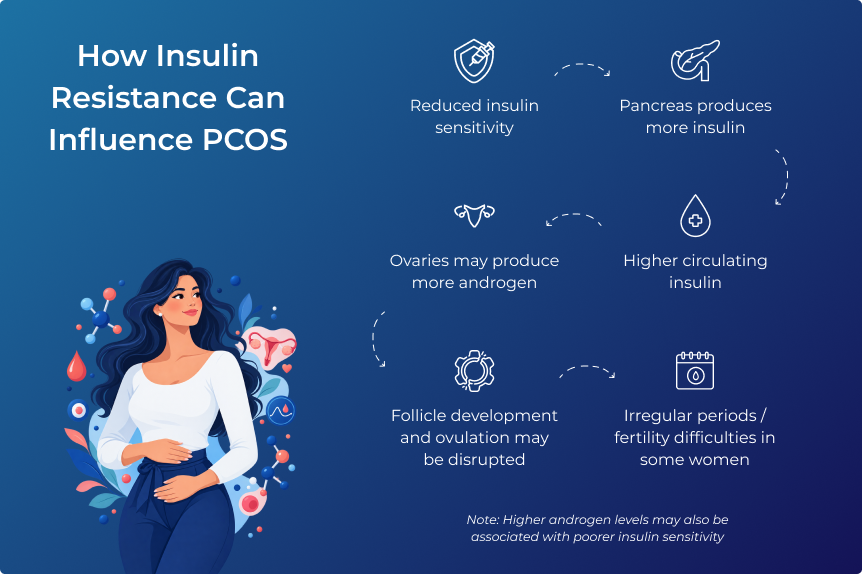
When the body becomes less sensitive to insulin, the pancreas may produce more of it to keep blood glucose within a healthy range. These higher insulin levels can influence ovarian hormone production and may contribute to irregular ovulation and other features of PMOS.
This relationship helps explain why PMOS can affect both reproductive and metabolic health. It is also why blood glucose, diabetes risk and insulin sensitivity may need to be considered alongside menstrual symptoms and fertility concerns.
Understanding how PMOS and insulin resistance are connected can make it easier to see why treatment often involves more than managing periods alone.
What Is Insulin Resistance?

Insulin is a hormone produced by the pancreas. One of its main roles is to help glucose move from the bloodstream into cells, where it can be used for energy.
When someone has insulin resistance, the body’s cells do not respond to insulin as effectively as they should. The pancreas compensates by producing more insulin in an attempt to keep blood glucose under control.
For a period of time, blood glucose levels may remain within the normal range because the pancreas is producing enough additional insulin to compensate. This means a person can have insulin resistance before developing prediabetes or type 2 diabetes.
Over time, however, the body may become less able to maintain normal blood glucose levels. This can increase the risk of impaired glucose tolerance and eventually type 2 diabetes.
Insulin resistance does not always cause noticeable symptoms, and blood glucose may remain within the normal range for some time. This means it can go undetected for years, including in women with PMOS who are not aware of any metabolic changes.
Appropriate assessment is therefore important, particularly when other risk factors are present.
Why Are PMOS/PCOS and Insulin Resistance Connected?
Insulin resistance is not the only cause of polyendocrine metabolic ovarian syndrome (PMOS), but it can contribute to some of the hormonal changes associated with the condition.
When the body becomes resistant to insulin, the pancreas often produces higher amounts of it. These higher insulin levels can affect the ovaries and encourage increased production of androgens, including testosterone.
Women naturally produce androgens, but higher levels can interfere with normal follicle development and ovulation. This can contribute to irregular or absent periods and may affect fertility.
At the same time, higher androgen levels may themselves be associated with poorer insulin sensitivity in some women. This means that metabolic and hormonal changes can influence one another rather than operating as completely separate processes.
Can You Have Insulin Resistance Without Being Overweight?

Yes. PMOS is a varied condition, and the extent of insulin resistance differs significantly between patients. Some women have clear metabolic abnormalities, while others have normal blood glucose and fewer metabolic risk factors.
Body weight can influence insulin sensitivity, but insulin resistance does not only affect women who are overweight. Women with PMOS can experience insulin resistance across a range of body sizes.
For this reason, insulin resistance should be assessed individually rather than inferred from appearance or body mass index alone.
Can You Have PMOS Without Insulin Resistance?
Yes. Insulin resistance is common in PMOS, but it is not present to the same degree in every woman. Some patients have normal glucose regulation and few metabolic risk factors.
This is why metabolic assessment should be based on individual health factors rather than assuming that everyone with PMOS has insulin resistance.
How Can Insulin Resistance Affect PMOS Symptoms?
Insulin resistance can contribute to several features of PMOS, largely through its effect on insulin and androgen levels.
Higher insulin levels may encourage the ovaries to produce more androgens. This can interfere with ovulation and contribute to irregular menstrual cycles.
As a result, insulin resistance may be associated with:
- Irregular or absent periods
- Irregular ovulation
- Difficulty conceiving in some women
- Higher androgen activity
- Abnormal blood glucose regulation
- Increased long-term risk of type 2 diabetes
Acne, excess facial or body hair and scalp hair thinning may also occur in women with PMOS because of increased androgen activity. However, these should not be regarded as direct signs of insulin resistance.
The severity of visible PMOS symptoms also does not reliably indicate how insulin-resistant someone is. A woman with relatively mild reproductive symptoms may still have metabolic risk factors, while someone with pronounced menstrual or androgen-related symptoms may have normal glucose regulation.
For this reason, PMOS assessment and management should consider both reproductive symptoms and metabolic health.
Recognising Insulin Resistance in PMOS
Insulin resistance often has no obvious symptoms. Some women may have signs suggesting higher metabolic risk, such as abnormal blood glucose, a strong family history of type 2 diabetes or acanthosis nigricans, which is a darkening and thickening of the skin that commonly appears around the neck, underarms or other skin folds.
It is also important to distinguish between measuring insulin resistance directly and assessing the health problems associated with it. Although insulin levels can be measured in blood, routinely available insulin tests do not provide a sufficiently reliable measure of insulin resistance for routine PMOS care.
For this reason, current international PMOS guidance focuses on assessing glycaemic status and overall metabolic risk rather than routinely measuring insulin levels.
A clinician may consider factors such as medical history, menstrual symptoms, family history, blood glucose, blood pressure, cholesterol and other metabolic markers when deciding whether further assessment is needed.
Tests and Metabolic Checks for PMOS

Women with PMOS have an increased risk of impaired fasting glucose, impaired glucose tolerance and type 2 diabetes. Importantly, this increased risk is recognised across different ages and body mass index categories.
For this reason, assessment of blood glucose is an important part of PMOS care.
Depending on individual risk factors, assessment may include:
- An oral glucose tolerance test, or OGTT
- Fasting blood glucose
- HbA1c
- Blood pressure
- Cholesterol and other blood lipid tests
- Review of family and personal medical history
The 75 g oral glucose tolerance test is considered the most accurate method for assessing glycaemic status in women with PMOS. It measures how the body responds to a defined amount of glucose over a set period.
Where an OGTT cannot be performed, fasting blood glucose or HbA1c may sometimes be used, although these tests can be less sensitive for identifying abnormalities in glucose regulation in women with PMOS.
The appropriate tests will depend on the patient’s age, medical history, previous results, family history and other risk factors. Blood glucose should be assessed when PMOS is diagnosed and monitored over time based on individual diabetes risk.
Can Insulin Resistance Affect Fertility?

Insulin resistance may contribute to fertility difficulties in some women with PMOS because higher insulin levels can influence androgen production and interfere with normal ovulation.
When ovulation becomes irregular or stops altogether, there are fewer opportunities for an egg to be released and fertilised. This can make conception less predictable or take longer.
However, insulin resistance is only one possible factor. PMOS affects fertility differently between women, and some continue to ovulate regularly and become pregnant naturally. Metabolic assessment may therefore form part of a wider fertility evaluation, particularly when periods are irregular or ovulation appears to be infrequent.
Metformin may be considered in selected women with PMOS, especially when insulin resistance or abnormal glucose regulation is present. It can improve insulin sensitivity and may support menstrual regularity or ovulation in some patients, but it is not the appropriate fertility treatment for everyone.
Why Does Insulin Resistance Matter During Pregnancy?
Pregnancy naturally changes the way the body responds to insulin. As pregnancy progresses, hormonal changes increase insulin resistance so that more glucose remains available to support the developing baby.
For most women, the pancreas compensates by producing more insulin. However, existing problems with insulin sensitivity may make glucose regulation more difficult.
Women with PMOS already have an increased risk of abnormal glucose regulation and gestational diabetes, particularly when insulin resistance is present before conception.
This is why blood glucose may be assessed before pregnancy or early in pregnancy in women with PMOS, depending on individual risk factors. Further glucose testing may also be recommended later in pregnancy.
How Is Insulin Resistance Managed in Women with PMOS?

There is no single treatment plan for insulin resistance in PMOS. Management should take account of metabolic health, symptoms, reproductive plans and any additional medical conditions.
1. Support Metabolic Health
Lifestyle changes can help improve insulin sensitivity and support overall metabolic health in women with PMOS.
Build Balanced Meals

A practical approach is to build meals around vegetables, a source of protein, a fibre-rich carbohydrate and a small amount of healthy fat. This can help produce a more gradual rise in blood glucose after meals.
For example:
- Choose wholegrain bread, oats, brown rice, quinoa or wholewheat pasta more often than highly refined carbohydrates
- Include protein such as eggs, fish, chicken, Greek yoghurt, tofu, beans or lentils with meals
- Add vegetables or salad to lunch and dinner
- Include healthy fats from foods such as olive oil, nuts, seeds or avocado
- Choose whole fruit rather than fruit juice most of the time
Adding protein, fibre and healthy fats to carbohydrate-containing meals can slow digestion and help reduce sharp rises in blood glucose. NHS dietary guidance for PMOS also recommends wholegrain, lower glycaemic index carbohydrates and balanced meals containing protein, healthy fats and vegetables.
There is usually no need to eliminate carbohydrates completely. The type, portion and combination of foods are often more useful considerations than avoiding an entire food group.
Move Regularly During the Day

Physical activity does not need to be highly intensive to benefit insulin sensitivity. Current PMOS guidance also recommends regular physical activity to support metabolic health.
Aim to include a combination of aerobic activity, such as brisk walking, cycling or swimming, and resistance exercise, such as weights, resistance bands or bodyweight exercises.
Small amounts of movement during the day can also help. For example, a short walk after lunch or dinner is an easy way to break up prolonged sitting and increase glucose use by the muscles. Evidence in people with diabetes also shows that frequent short walking breaks can support blood glucose management.
Other practical options include:
- Taking the stairs instead of the lift
- Walking part of the journey to work
- Getting up regularly when working at a desk
- Taking a 10 to 15-minute walk after a meal
- Adding two resistance-training sessions each week
Prioritise Sleep
Regular, sufficient sleep also supports metabolic health. Poor sleep can affect glucose regulation, appetite and overall wellbeing, so maintaining a consistent sleep routine can be particularly useful for women with PMOS.
Focus on Sustainable Changes
These habits can improve metabolic health even without weight loss.
When weight management is clinically appropriate, it should be approached individually and realistically. PMOS affects women across a wide range of body sizes, and insulin resistance should not be treated as a consequence of personal failure or poor lifestyle choices.
Managing blood pressure, cholesterol and blood glucose where necessary, and avoiding smoking, are also important parts of long-term metabolic health.
2. Metformin
Metformin is an insulin-sensitising medicine commonly used in the management of type 2 diabetes and may also be considered for selected women with PMOS. It reduces glucose production by the liver and helps improve the body’s response to insulin.
In women with PMOS, metformin may be considered particularly when metabolic concerns such as impaired glucose regulation or increased diabetes risk are present. It may also improve menstrual regularity in some patients.
Metformin can cause gastrointestinal side effects, particularly when treatment begins. If prescribed, taking it with food may help reduce nausea, diarrhoea or abdominal discomfort. Persistent side effects should be discussed with the prescribing clinician rather than stopping treatment without advice.
Long-term use can also be associated with lower vitamin B12 levels in some patients, so additional monitoring may be appropriate depending on individual risk.
However, metformin is not automatically required simply because a woman has PMOS. Whether it is appropriate will depend on factors such as blood glucose results, metabolic risk, symptoms, reproductive goals and other treatments being considered.
The decision to use metformin should therefore be based on individual clinical assessment rather than the PMOS diagnosis alone.
Does Insulin Resistance Mean You Will Develop Diabetes?
No. Having insulin resistance does not mean that type 2 diabetes is inevitable.
However, insulin resistance is an important risk factor because the pancreas may eventually struggle to produce enough insulin to compensate for the reduced response of the body’s cells.
Women with PMOS have an increased risk of impaired glucose tolerance and type 2 diabetes compared with women without the condition.
This makes early identification of abnormal glucose regulation useful. If changes are detected, metabolic health can be monitored and managed before diabetes develops or progresses.
Family history, age, previous gestational diabetes and other metabolic factors may further influence individual risk. PMOS can affect long-term metabolic health, so appropriate testing and follow-up are more useful than relying on symptoms alone.
When Should You Speak to a Specialist?

It may be helpful to seek medical advice if PMOS is accompanied by concerns about metabolic or hormonal health.
Reasons to arrange an assessment may include:
- Irregular or absent periods
- Difficulty conceiving
- Abnormal blood glucose results
- Previous gestational diabetes
- A strong family history of type 2 diabetes
- Symptoms or signs suggesting significant androgen excess
- Thyroid or other hormonal concerns
- Existing prediabetes or diabetes
- Uncertainty about whether metformin or another treatment is appropriate
Because PMOS can affect both reproductive and metabolic health, the most appropriate specialist will depend on the symptoms and clinical concerns.
A gynaecologist is usually the most relevant specialist for irregular periods, ovulation problems, fertility concerns and other reproductive symptoms. An endocrinologist is more appropriate when there are concerns about insulin resistance, abnormal blood glucose, diabetes risk, thyroid function or other hormonal and metabolic issues.
In some cases, both specialties may be involved. Coordinated care can be particularly useful when reproductive symptoms occur alongside metabolic concerns.
PMOS and Insulin Resistance Support at London Lauriston Clinic
PMOS can affect both reproductive and metabolic health. Understanding whether insulin resistance or abnormal glucose regulation is present can help guide appropriate monitoring and treatment.
London Lauriston Clinic, as a private health clinic in London, offers specialist care across gynaecology, diabetes and endocrinology. Its gynaecology department manages a range of women’s health conditions, including polycystic ovarian syndrome, while its diabetes and endocrinology services can assess associated hormonal and metabolic concerns.
London Lauriston Clinic provides individual assessments for women concerned about PMOS, insulin resistance, irregular periods, blood glucose or related reproductive and metabolic symptoms. The most appropriate care will depend on each patient’s symptoms, medical history, test results and reproductive goals.
To arrange a consultation at London Lauriston Clinic, email info@llclinics.co.uk or book an appointment through the clinic’s website contact form.