
Skin Cancer and Mole Checks: How to Know When a Mole Needs Medical Attention
A mole can become a concern for many reasons. It may look darker than before, appear larger, feel itchy, bleed slightly, or simply seem different from the other marks on your skin.
In many cases, moles are harmless. Still, it is sensible to pay attention when a mole changes, as some changes can be associated with skin cancer. The aim is not to encourage anxiety or self-diagnosis, but to help you understand what to look for, how to check your skin properly, and when a professional mole check may be the right next step.
The NHS advises that a new mole or a change in an existing mole may be a possible sign of melanoma. This is why it is important to check your skin for unusual changes, including areas that are harder to see, such as the back, scalp, or backs of the legs.
Mole checks can help assess whether a skin change is harmless, needs monitoring, or requires further investigation. They can also help distinguish between moles, benign skin lesions, pigmentation changes, and other skin conditions that may require a different type of care.
This article offers clear, patient-focused guidance on skin cancer and mole checks, including what to look for, when to seek medical advice, and what to expect from a professional assessment.
What Is a Mole Check?
A mole check is a clinical assessment of one or more moles, skin lesions, or pigmented areas that appear new, unusual, or have changed over time. During the appointment, a clinician will usually ask when the mole first appeared, whether you have noticed any changes, whether it causes symptoms such as itching or bleeding, and whether there is any personal or family history of skin cancer.
The examination may involve looking at the mole’s size, shape, colour, border, surface, and position on the body. If you have several moles, or more than one area of concern, the clinician may also examine the surrounding skin or carry out a broader skin check.
This wider view matters because moles are best understood in context. Some people naturally have many moles, while others have very few. Some moles may be darker, raised, or slightly irregular while still being benign. What matters clinically is whether a mole looks unusual for your skin, or whether it has changed over time.
Common Signs That a Mole May Need Medical Attention
A mole does not need to look obviously abnormal to deserve attention. Many people wait before seeking advice because they expect a concerning mole to look clearly or dramatically different. In reality, the signs can be more subtle.
A more useful question is whether the mole is new, changing, causing symptoms, or looks different from the usual pattern of your skin.
Signs that may warrant a professional mole check include:
- A mole that has changed in size, shape, or colour
- A mole with uneven or irregular edges
- A mole with more than one colour
- A mole that appears larger than other moles or continues to grow
- A new or unusual mark that does not go away after a few weeks
- A mole that becomes itchy, painful, swollen, crusty, or inflamed
- A mole that bleeds without a clear reason
- A dark area under a nail that has not been caused by an injury
The NHS highlights changes in size, shape, colour, discomfort, itching, bleeding, inflammation, crusting, and persistent new or unusual marks as reasons to seek medical advice.
These signs do not automatically mean that a person has skin cancer. Many skin changes are benign. However, they are also signs that should not be ignored, especially when they are new, persistent, or unusual for your skin.
The ABCDE Rule for Checking Moles
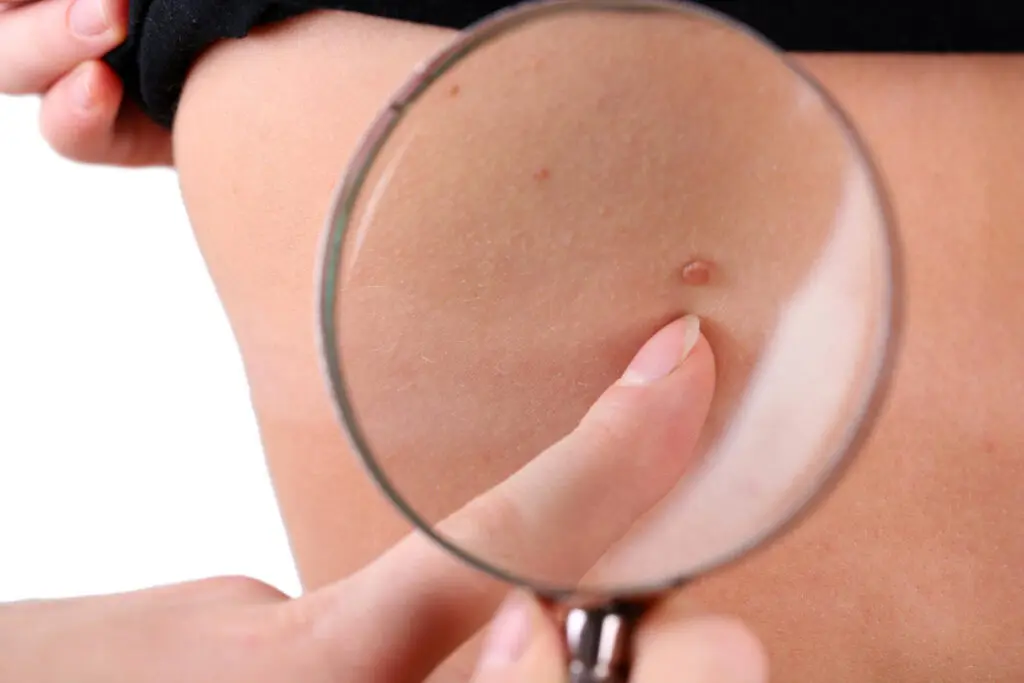
The ABCDE rule is a helpful way to look at a mole at home and decide whether it may need medical attention. It is not a diagnostic tool, and it cannot replace a professional mole check, but it can give you a clearer idea of which changes to take seriously.
A is for Asymmetry
A mole may need checking if one half looks noticeably different from the other. Benign moles are often more even in shape, although there are exceptions.
B is for Border
Pay attention to borders that look uneven, blurred, jagged, or irregular. Harmless moles often have smoother, more clearly defined edges.
C is for Colour
A mole with several colours, such as different shades of brown, black, red, pink, or grey, may need assessment. A mole that changes colour over time should also be checked.
D is for Diameter
Larger moles, especially those over 6mm, are often mentioned in skin cancer awareness guidance. Size alone does not mean a mole is concerning, but a mole that is large and changing should be reviewed.
E is for Evolving
This is often the most important part of the rule. A mole that changes over time, whether in size, shape, colour, border, texture, or symptoms, should be taken seriously.
For patients, the aim is not to memorise every possible warning sign or inspect every mark with anxiety. The better habit is to notice what is normal for your own skin. A mole that stands out from the rest, sometimes called an “ugly duckling” mole, may be worth checking even if it does not fit every part of the ABCDE rule.
Why Change Over Time Matters
A photograph can be useful when monitoring a mole, but it does not always give the full picture. Moles can look different depending on the lighting, camera quality, skin tone, and where they are on the body. What often matters more is whether the mole has altered since you first noticed it.
A practical way to monitor a mole is to take a clear photograph in good natural light, note the date, and record where it is on the body. This can make it easier to notice whether it has grown, become darker, developed new colours, changed shape, or started to cause symptoms. It can also help a clinician understand the timeline more clearly.
However, photographs should not replace professional assessment. Online images of melanoma and abnormal moles can be helpful for general awareness, but they are not reliable for diagnosis. Cancer Research UK states that pictures of abnormal moles are only a guide, and that further tests may be needed to determine whether a mole is melanoma or benign.
This matters because melanoma does not always look the same from person to person. Skin tone, mole type, location, and the stage of the lesion can all affect how it appears. Even a subtle-looking mole may need attention if it is new, changing, or causing symptoms.
Where Skin Cancer Can Appear on the Body
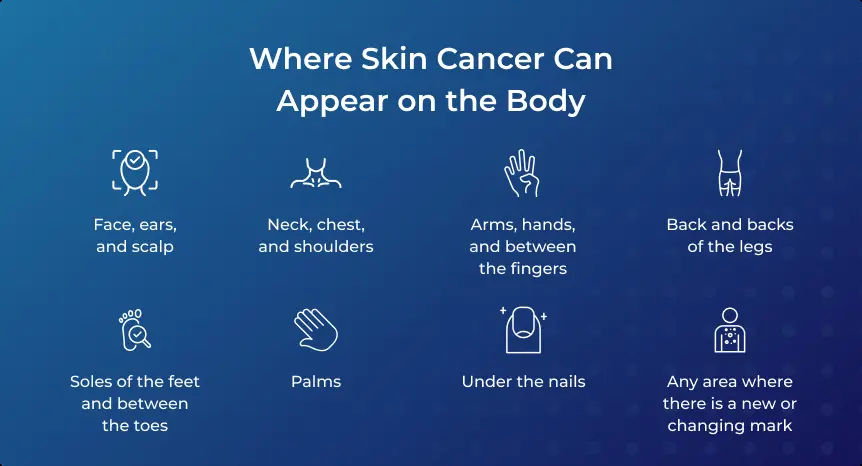
Many people associate skin cancer only with areas that receive frequent sun exposure, such as the face, arms, shoulders, back, and legs. These areas are important to check, but they are not the only places where skin cancer can appear. This is especially relevant for melanoma, which can appear anywhere on the body.
This article mainly focuses on mole changes and melanoma, but other types of skin cancer can appear in different ways. This is why a professional skin assessment can be helpful when a mark, lesion, or patch does not look normal for your skin.
Melanoma can appear anywhere on the body. They are more common in areas often exposed to the sun, but rarer types can affect areas such as the eyes, soles of the feet, palms of the hands, under the nails, or the genital area.
When checking your skin, it is useful to look at:
- Face, ears, and scalp
- Neck, chest, and shoulders
- Arms, hands, and between the fingers
- Back and backs of the legs
- Soles of the feet and between the toes
- Palms
- Under the nails
- Any area where there is a new or changing mark
Some areas are easy to miss, especially the back, scalp, and backs of the legs. Using a mirror, or asking a partner, family member, or trusted person to help check difficult areas, can make self-checking more effective.
When Should You Book a Mole Check?
It is sensible to book a mole check when a mole or skin mark is new, changing, persistent, symptomatic, or unusual for your skin. You do not need to be certain that something is wrong before seeking advice. The purpose of the appointment is to understand whether the mole can be safely monitored, whether treatment is needed, or whether further investigation may be appropriate.
A mole check is especially worth considering if the mole has changed recently, looks different from your other moles, bleeds, becomes painful or itchy, crusts, or does not settle after a few weeks. It may also be helpful if you have many moles, a personal or family history of skin cancer, or significant past sun exposure.
For many patients, a mole check provides reassurance. For others, it identifies that a mole should be monitored or investigated further. In either case, getting professional advice can help remove uncertainty and guide the next appropriate step.
What Happens During a Professional Mole Check?
A professional mole check is usually a straightforward appointment. The clinician will ask about the mole or area of concern, including how long it has been there, whether it has changed, and whether it causes symptoms such as itching, soreness, bleeding, or crusting.
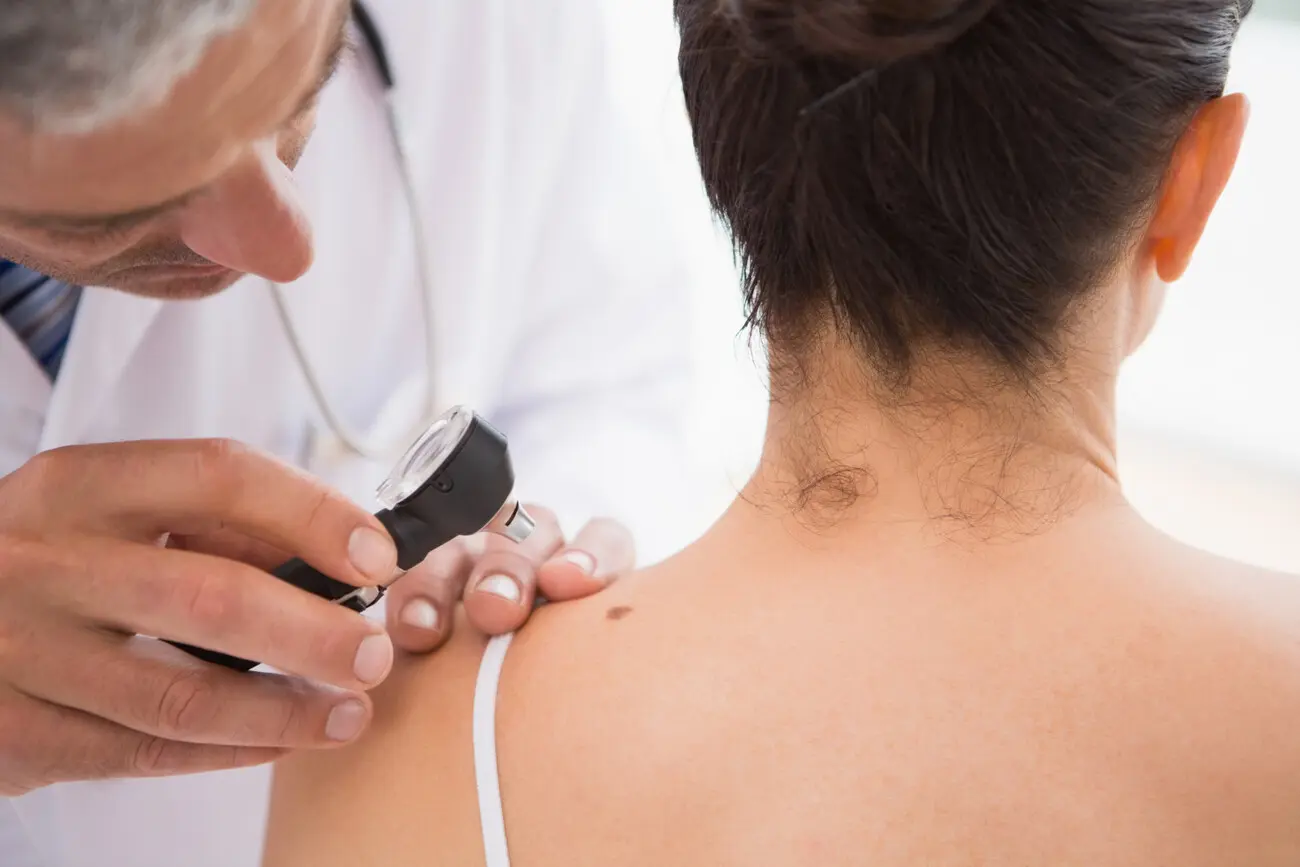
The mole and surrounding skin may then be examined closely. In many cases, the clinician may use a dermatoscope, a handheld device that allows the skin to be viewed in more detail.
Dermoscopy can help clinicians look more closely for features associated with melanoma or non-melanoma skin cancer. They may also check the rest of the skin for other unusual or changing areas. The clinician may apply oil or gel before placing the dermatoscope against the skin. The process does not hurt or damage the skin.
Photographs may sometimes be taken to monitor changes over time. If further investigation is needed, the clinician may recommend additional tests or removal. When melanoma is suspected, a specialist may remove the mole with a small area of surrounding skin so it can be examined in a laboratory. This is known as an excision biopsy.
Being referred for further assessment or testing does not automatically mean cancer. It simply means the mole needs a closer and more detailed review.
How to Prepare for a Mole Check
Preparing a few details in advance can make a mole check more useful, as clear information allows the clinician to understand the concern more accurately.
Before the appointment, it may help to note:
- When the mole or skin change was first noticed
- What has changed, such as size, shape, colour, texture, or symptoms
- Whether the mole itches, bleeds, crusts, or feels sore
- Whether there has been any injury to the area
- Whether there is a personal or family history of skin cancer
- Any history of significant sunburn or sunbed use
- Whether photographs show how the mole looked previously
If the mole is on the face or body, try not to cover the area with heavy makeup or fake tan before the appointment. If the concern involves a nail, removing nail polish before the assessment may help the clinician see the area more clearly.
It is also worth mentioning any other moles or skin changes that worry you. Making a short list beforehand can help ensure nothing important is missed.
Looking at the Wider Skin Picture

A mole check can sometimes reveal more than one specific concern. A patient may book an appointment because of a changing mole, but the clinician may also assess whether the skin change could be related to another type of skin condition.
A skin mark that feels worrying may turn out to be harmless, or it may be linked to inflammation, pigmentation changes, a small blood vessel change, infection, or another skin concern.
For example, a raised lesion may be harmless, a scaly patch may be linked to inflammation, and a changing pigmented area may need closer assessment. The right next step depends on how the area looks, whether it has changed, and the patient’s medical and skin history.
This is why a professional assessment can be helpful. It is not only about naming a condition, but about understanding what has been found, whether it needs monitoring, and whether any treatment or further investigation is appropriate.
Can Mole Checks Prevent Skin Cancer?
Mole checks do not prevent skin cancer from developing. Their role is to identify skin changes that may need monitoring, treatment, or further investigation. Prevention depends more on reducing avoidable risk, particularly excessive exposure to ultraviolet radiation from the sun or sunbeds.
This makes sun protection important, including avoiding sunburn, using appropriate sunscreen, wearing protective clothing, and being careful during periods of strong sunlight.
That said, mole checks can still play an important role in looking after skin health. They help people become more familiar with their own skin, notice meaningful changes earlier, and seek advice when something does not seem normal.
Self-checking should be practical, not obsessive. It is useful to know what your moles and skin marks usually look like, but the aim is not to become anxious about every small variation. Anyone with a higher level of risk, such as a previous skin cancer, many atypical moles, or a strong family history, should follow personalised medical advice on how often professional review is appropriate.
Dermatology Consultations at London Lauriston Clinic
If a mole has changed, become uncomfortable, or simply does not look normal for your skin, a dermatology consultation can help you understand what to do next.
London Lauriston Clinic is a private healthcare clinic in central London, offering consultations, diagnostics, and treatments across several specialties. Its dermatology service includes assessment and treatment for a range of skin concerns, including melanoma, as well as the excision and treatment of skin cancer. Patients may also be seen by specialists such as Dr Manuraj Singh, Consultant Dermatologist and Dermatopathologist, whose clinical interests include mole checks, skin cancer, and minor skin surgery.
For patients comparing London clinics or looking for a private health clinic in London, London Lauriston Clinic offers access to dermatology care in a central and convenient location.
A changing mole should not be ignored, but it should not automatically be assumed to be cancer either. The right step is a measured, informed assessment with a clinician who can advise on the most appropriate next stage.
If you are concerned about a mole or skin change, you can book a dermatology consultation at London Lauriston Clinic for a professional assessment.
FAQs About Mole Checks and Skin Cancer
- How often should I check my moles?
Check your skin regularly so you know what is normal for you. Look out for new moles, visible changes, itching, bleeding, crusting, or soreness.
- Are all changing moles a sign of skin cancer?
No. Many changing moles are benign, but changes in size, shape, colour, border, or symptoms should be checked, especially if they are new or persistent.
- What does a suspicious mole look like?
A suspicious mole may be uneven, have irregular borders, contain several colours, grow, or change over time. Moles that look different from your others should also be checked.
- When should I book a mole check?
Book a mole check if a mole is new, changing, bleeding, itchy, painful, crusting, or unusual for your skin. You do not need to be certain something is wrong before seeking advice.
Conclusion
Most moles are harmless, and many skin changes are not skin cancer. Even so, it is important to pay attention to any mole that changes in size, shape, colour, texture, or symptoms. A new mole that looks unusual, a mole that stands out from the rest, or a skin mark that does not go away should also be checked.
The ABCDE rule can help you recognise possible warning signs, but it cannot replace a professional assessment. What matters most is knowing what is normal for your own skin and seeking medical advice when something changes.
A timely mole check can provide reassurance, support early detection where needed, and help you understand the most appropriate next step. If treatment is required, identifying a concern earlier can often make care more straightforward.