

Cardio-Metabolic Risk Factors Explained
Cardio-metabolic health has become an important focus in modern medicine, not only because of a sudden rise in disease alone, but because early changes can now be identified with greater accuracy.
Cardio-metabolic disorders account for a significant proportion of preventable chronic disease in the UK. In London and other major urban centres, many adults who appear healthy are found to have underlying cardio-metabolic risk factors long before symptoms appear.
These changes often progress quietly, influenced by lifestyle, genetic predisposition, chronic stress, and metabolic shifts that may not be detected through routine health checks alone.
Recognising cardio-metabolic risk factors at an early stage allows for more precise and timely intervention. Within a private healthcare setting, this enables a preventative approach rather than one driven by established disease. Patients gain a clearer understanding of their current cardio-metabolic status, alongside practical, evidence-based guidance to support long-term cardiovascular and metabolic health.
This article outlines the key cardio-metabolic risk factors and explains how individuals can take a proactive, informed approach to protecting their cardio-metabolic health.
What Is Cardio-Metabolic Health?
Cardio-metabolic health describes how effectively the cardiovascular and metabolic systems function together to support overall health.
These systems are responsible for regulating energy production, storage, and use, while also ensuring adequate blood flow, oxygen delivery, and stable vascular function. Key processes such as glucose metabolism, lipid transport, blood pressure regulation, and inflammatory control are closely linked within this integrated system.
When disruption occurs in one area, it often affects others. For instance, insulin resistance can alter lipid metabolism and impair blood vessel function, placing additional strain on the heart. Similarly, elevated blood pressure may indicate underlying metabolic imbalance rather than an isolated cardiovascular concern.
This close interconnection helps explain why cardio-metabolic conditions frequently develop in parallel. It also highlights the clinical value of a comprehensive assessment that considers both metabolic and cardiovascular factors together.
Why Cardio-Metabolic Health Matters
Impaired cardio-metabolic health is linked to a higher risk of cardiovascular disease, type 2 diabetes, stroke, and metabolic syndrome. These conditions rarely emerge suddenly. Instead, they evolve through years of gradual metabolic stress and vascular change.
Individuals with a family history of heart disease, diabetes, or hypertension carry an increased risk. However, lifestyle factors remain significant across all population groups. Sedentary lifestyle, chronic stress, disrupted sleep, and dietary imbalance are common contributors, particularly in demanding urban environments.
Identifying cardio-metabolic risk factors early allows intervention at a stage when prevention and reversal are more achievable.
Understanding Cardio-Metabolic Risk Factors
Cardio-metabolic risk factors rarely occur in isolation. Instead, they often develop together, forming patterns that significantly increase overall cardiovascular and metabolic risk, even when individual measurements fall only slightly outside normal ranges.
This clustering effect is one reason why early cardio-metabolic dysfunction may go unrecognised during routine health assessments.
1. Abdominal Obesity and Body Composition
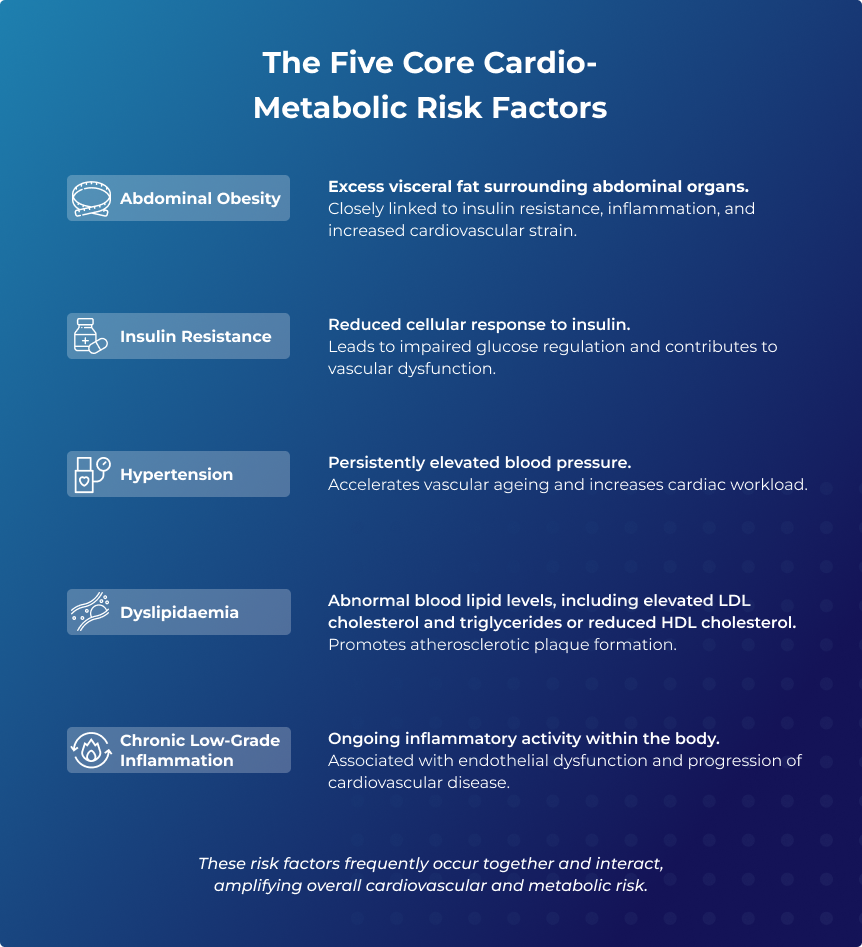
Excess visceral fat, stored around the abdominal organs, is metabolically active and closely linked to insulin resistance, chronic inflammation, and hormonal imbalance. Unlike subcutaneous fat, visceral fat directly influences metabolic processes and cardiovascular strain.
For this reason, waist circumference and body composition provide more clinically meaningful insight than body weight or body mass index alone.
2. Insulin Resistance and Glucose Dysregulation
Insulin resistance reduces the body’s ability to regulate blood glucose efficiently. In its early stages, this may occur without obvious symptoms, but over time it can progress to impaired fasting glucose and type 2 diabetes.
Insulin resistance also contributes to vascular dysfunction by promoting inflammation and impairing endothelial health.
3. Dyslipidaemia
Dyslipidaemia refers to imbalances in blood lipids, including elevated LDL cholesterol, reduced HDL cholesterol, and increased triglycerides. These abnormalities accelerate atherosclerotic plaque development and increase cardiovascular risk.
In some cases, advanced lipid testing provides additional insight into particle size and lipid behaviour that standard panels may not detect.
4. Hypertension
Persistently elevated blood pressure increases cardiovascular strain and accelerates vascular ageing. Hypertension is frequently associated with underlying metabolic dysfunction, including insulin resistance and excess visceral fat.
5. Chronic Low-Grade Inflammation
Chronic low-grade inflammation plays a central role in the development and progression of cardio-metabolic disease. Elevated inflammatory markers are linked to insulin resistance, endothelial dysfunction, and the formation of atherosclerotic plaques, contributing to long-term cardiovascular risk.
While standard health checks may identify individual abnormalities, they often do not capture how these risk factors interact or how they may progress over time. A more integrated assessment allows for earlier recognition and more effective, targeted intervention.
These clustered risk factors are closely linked through shared metabolic and vascular pathways.
How Metabolism Influences Cardiovascular Health
Metabolism and heart health are closely connected. When metabolic processes operate efficiently, they help provide a stable energy supply, support healthy blood vessels, and reduce strain on the cardiovascular system. When metabolic function is impaired, the heart is required to work harder to maintain normal circulation.
Insulin resistance can interfere with nitric oxide production, which plays an essential role in maintaining arterial flexibility. Reduced nitric oxide availability contributes to increased arterial stiffness and higher blood pressure. In addition, excess visceral fat releases inflammatory mediators that promote vascular dysfunction and increase cardiac workload. Together, these processes help explain why metabolic health is a key factor in long-term cardiovascular outcomes.
It is also important to recognise that body weight alone is not a reliable indicator of cardio-metabolic health. Individuals with a normal body mass index may still carry significant metabolic risk, highlighting the value of objective metabolic markers in clinical assessment.
What Is a Cardio-Metabolic Analysis?

A cardio-metabolic analysis is a detailed clinical assessment used to evaluate metabolic and cardiovascular risk more precisely than routine health testing. It combines biochemical markers, physiological measurements, and clinical interpretation to provide a detailed health profile.
Rather than assessing results in isolation, this analysis focuses on how metabolic and cardiovascular indicators interact. By identifying patterns across multiple markers, it allows earlier recognition of underlying dysfunction and supports more personalised, clinically relevant recommendations.
Common Components Assessed
- Blood glucose and insulin-related markers
- Lipid profile, including cholesterol and triglycerides
- Inflammatory markers associated with cardiovascular risk
- Blood pressure trends and indicators of vascular health
In a private clinic setting, cardio-metabolic analysis is commonly used as a preventative tool. It is particularly valuable for individuals seeking a deeper understanding of their health beyond standard screening and for addressing potential risks before clinical disease develops.
A detailed explanation of how cardio-metabolic analysis works is available in our dedicated article.
The Role of Cardiovascular Fitness Testing
Cardiovascular fitness testing adds a functional perspective to cardio-metabolic assessment. While blood markers provide insight into biochemical risk, cardiovascular fitness testing evaluates how efficiently the heart, lungs, and muscles work together during physical exertion.
This type of testing measures aerobic capacity and cardiorespiratory efficiency, both of which are strong predictors of cardiovascular health and longevity. Reduced cardiovascular fitness is associated with increased cardio-metabolic risk, even in individuals without overt disease.
When combined with metabolic data, cardiovascular fitness testing allows clinicians to identify functional limitations that may not be apparent through laboratory measurements alone. The results also support personalised exercise recommendations, helping to ensure that physical activity is appropriate, safe, and effective for each individual.
This assessment is particularly relevant for people with predominantly sedentary work patterns or prolonged exposure to occupational stress.
Who Should Consider Cardio-Metabolic Testing?
Cardio-metabolic testing is suitable for a broad range of adults and is not limited to individuals with diagnosed medical conditions.
This type of assessment may be particularly beneficial for:
- Individuals with a family history of heart disease, diabetes, or stroke
- Professionals exposed to chronic stress or prolonged periods of physical inactivity
- Patients experiencing unexplained fatigue, weight changes, or metabolic concerns
- Those seeking a preventative approach through a private health clinic
It is a common misconception that cardio-metabolic testing is only relevant later in life. In practice, early assessment can identify risk factors many years before clinical disease develops.
Understanding Cardio-Metabolic Results and Risk Profile
Interpreting cardio-metabolic results requires careful clinical context. Individual markers are not viewed in isolation but are evaluated alongside overall patterns, lifestyle factors, and family history.
Results may indicate:
- Early-stage risk that can be addressed through targeted lifestyle modification
- Moderate risk requiring structured intervention and closer clinical monitoring
- Established dysfunction that warrants medical follow-up or specialist referral
Clear interpretation ensures that patients understand not only what their results show, but also why those findings are clinically relevant and how they guide appropriate next steps in managing cardio-metabolic health.
Improving Cardio-Metabolic Health Through Prevention
Improvement in cardio-metabolic health is often achievable through targeted, evidence-based interventions. Lasting progress depends on structured, sustainable adjustments informed by clinical insight.
When metabolic and cardiovascular risk factors are identified early, there is a significant opportunity to enhance outcomes and reduce long-term risk.
Nutrition
Nutrition plays a central role in cardio-metabolic care. Dietary strategies are designed to support stable blood glucose regulation, balanced lipid profiles, and reduced inflammation. This generally involves improving overall diet quality, increasing fibre intake, moderating refined carbohydrates, and incorporating appropriate amounts of healthy fats and lean protein.
Consistency is essential. A structured nutritional plan tailored to individual metabolic findings provides a practical foundation for measurable and sustainable improvement.
Physical Activity
Physical activity is a key determinant of cardio-metabolic health. Exercise recommendations informed by cardiovascular fitness testing allow activity levels to be aligned with an individual’s current physiological capacity and clinical status. This ensures that exercise prescriptions are both safe and effective.
Aerobic conditioning improves cardiorespiratory efficiency and insulin sensitivity, while resistance training supports muscle mass and metabolic function. Together, these approaches enhance glucose regulation, lipid metabolism, and overall cardiovascular performance.
Stress Management and Sleep Regulation
Chronic psychological stress and poor sleep disrupt metabolic regulation and contribute to elevated blood pressure, insulin resistance, and inflammatory activity. Addressing these factors is not secondary to treatment but integral to comprehensive cardio-metabolic care.
Structured stress management strategies and improved sleep hygiene can have measurable effects on metabolic and cardiovascular parameters over time.
Ongoing Monitoring and Clinical Follow-Up
Regular follow-up assessments allow clinicians to track progress, reassess risk, and adjust recommendations where necessary. In a private clinic environment, continuity of care supports sustained improvement rather than short-term change.
Cardio-Metabolic Care in a Private Health Clinic Setting
Private healthcare offers clear advantages in the assessment and management of cardio-metabolic health.
Consultations allow sufficient time for detailed evaluation, careful interpretation of results, and thorough discussion of findings. Testing is integrated under a single clinical framework, which supports continuity of care and reduces the fragmentation that can occur when assessments are conducted across multiple providers.
Within a private health clinic in London, the focus is on preventative and personalised care. Patients receive clear, structured explanations of their results, helping them understand their cardio-metabolic profile and what it means for their long-term health.
London Lauriston Clinic adopts this approach to support early identification of risk and provide clear, evidence-based pathways for proactive management. For this reason, the clinic now offers a comprehensive cardio-metabolic analysis, a non-invasive diagnostic assessment that provides objective insight into cardiovascular fitness, energy metabolism, and recovery capacity.
Patients benefit from structured guidance tailored to their individual findings.
Frequently Asked Questions About Cardio-Metabolic Health
What are the five main cardio-metabolic risk factors?
The five principal cardio-metabolic risk factors typically include abdominal obesity, insulin resistance, hypertension, dyslipidaemia, and early vascular disease such as atherosclerosis. These conditions frequently occur together and interact in ways that amplify overall cardiovascular and metabolic risk.
What are the five key metabolic markers assessed in cardio-metabolic health?
Several core metabolic markers are routinely used to evaluate overall cardio-metabolic health. These typically include blood pressure, blood glucose levels, triglycerides, high-density lipoprotein cholesterol (HDL), low-density lipoprotein cholesterol (LDL), and waist measurement as an indicator of abdominal adiposity.
What is the difference between standard blood tests and cardio-metabolic analysis?
Standard blood tests typically assess individual markers in isolation. A cardio-metabolic analysis evaluates how these markers interact, providing a broader and more complete risk profile.
Is cardiovascular fitness testing safe?
When performed in a clinical setting, cardiovascular fitness testing is conducted under appropriate supervision and tailored to the individual’s health status. The level of exertion is carefully adjusted to ensure safety while obtaining accurate functional data.
How often should cardio-metabolic health be assessed?
The recommended frequency depends on personal risk factors, medical history, and initial findings. Periodic reassessment is often advised to monitor changes over time and to evaluate the effectiveness of any interventions.
Can cardio-metabolic risk factors be improved?
Many risk factors respond well to targeted lifestyle modifications and, where necessary, clinical intervention, particularly when identified early.
Do abnormal results always require specialist referral?
Not necessarily. Some findings can be managed through targeted lifestyle adjustments and ongoing monitoring. Others may require further investigation or referral, depending on the degree of abnormality and overall clinical context.
Conclusion
Cardio-metabolic risk factors develop gradually, often without obvious symptoms. Understanding these risks through comprehensive assessment allows earlier, more effective intervention.
Many individuals are reassured to discover that early changes can often be addressed effectively when identified in time. Combining metabolic markers with cardiovascular fitness testing provides a clearer picture of health than either approach alone.
For individuals seeking preventative, personalised care, cardio-metabolic analysis offers an evidence-based pathway towards long-term cardiovascular and metabolic wellbeing. The goal is not short-term correction, but sustained health built on informed decisions and ongoing support.