

ADHD or Stress, Anxiety, and Depression? A Guide to Understanding the Differences
Many adults reach a stage where ongoing problems with concentration, motivation, or emotional regulation begin to interfere with daily life. These difficulties often prompt the question of whether the underlying cause is ADHD, stress, anxiety, or depression.
Because the symptoms can appear so similar, it is easy to misinterpret what is happening. A clear distinction is important, as each condition requires a different form of support, whether structured strategies for ADHD or focused treatment for anxiety or low mood.
This guide explains why these conditions overlap and offers practical ways for adults to recognise the patterns that set them apart. It also highlights the importance of specialist assessment for those who have spent years seeking answers without certainty. Early clarification helps reduce unnecessary distress and gives adults a clearer path toward appropriate, targeted support.
What ADHD Actually Is
ADHD is a lifelong neurodevelopmental condition defined by consistent differences in attention regulation, impulse control, and executive functioning. It is not caused by pressure, lack of discipline, or poor organisation. Instead, it reflects how the brain processes focus, motivation, and behavioural regulation.
Adults with ADHD often describe feeling mentally busy yet easily derailed, especially when tasks demand sustained concentration or detailed planning. These patterns appear across all stages of life, although many people develop compensatory strategies that mask the underlying difficulties. Social expectations and coping behaviours can also delay recognition until adulthood.
There are three recognised presentations: inattentive, hyperactive-impulsive, and combined. The inattentive presentation is frequently mistaken for anxiety or depression because it involves forgetfulness, inconsistent attention, and difficulty following through on tasks. Hyperactive-impulsive ADHD is more visible in childhood, but in adults it often presents as internal restlessness or persistent mental activity. Combined presentation includes features of both.
ADHD does not develop from stress, although stress can significantly intensify symptoms, leading to greater difficulty concentrating, regulating emotions, or prioritising tasks. When ADHD remains unrecognised, adults may experience ongoing frustration or assume personal failure rather than understanding these patterns as part of a neurodevelopmental difference.
In private health clinics, such as the London Lauriston Clinic, clinicians frequently see adults who have spent years navigating these symptoms without answers.
What Stress Looks Like
Stress is a normal physiological response to perceived challenge or pressure. It becomes problematic when this response is prolonged or out of proportion to the situation.
Short-Term vs Long-Term Stress
Short-term stress can sharpen focus and increase alertness, but chronic stress often has the opposite effect. Adults experiencing long-term stress may feel tense, irritable, or physically strained. Common signs include headaches, muscle tightness, fatigue, and reduced cognitive efficiency. Over time, these changes can affect sleep, concentration, and emotional stability.
Chronic stress can also mimic ADHD because the brain becomes overstimulated and less able to filter distractions. The sensation of being mentally overloaded mirrors the difficulties seen in executive function disorders. Many patients describe feeling scattered or overwhelmed, yet their symptoms often arise from sustained life pressures rather than a neurodevelopmental condition.
Distinguishing the two requires careful assessment. Stress typically follows identifiable triggers such as workload, family responsibilities, or financial concerns. Symptoms often ease when demands reduce or when the person has sufficient rest. ADHD does not fluctuate in this pattern – it remains consistent across environments, although stress levels can influence how noticeable or challenging the symptoms feel day to day.
Understanding Anxiety
Anxiety is one of the most common reasons adults seek professional help. It involves persistent worry, intrusive thoughts, and heightened physiological arousal. Generalised anxiety, social anxiety, and panic each present in different ways, yet all influence attention and emotional processing.
When someone is experiencing anxiety, the mind often anticipates negative outcomes, creating a cycle of tension, hypervigilance, and constant self-monitoring. This state makes concentration difficult because mental resources are directed towards evaluating potential threats rather than engaging fully with tasks.
The overlap between anxiety and ADHD can lead to confusion. Anxiety creates a busy, worry-driven internal dialogue, whereas ADHD creates a busy mind that shifts direction quickly without intentional focus.
Behavioural responses also differ. Anxiety often leads to avoidance, overpreparation, reassurance seeking, or perfectionistic tendencies. ADHD is more likely to create inconsistent engagement, impulsive decisions, or difficulty maintaining attention.
Many patients describe symptoms that resemble both patterns, which is why a structured assessment with a specialist clinician is so valuable. An experienced professional can determine whether the difficulties arise from anxiety or reflect an underlying neurodevelopmental condition.
Recognising Depression
Depression affects mood, energy levels, and overall cognitive functioning. Adults experiencing depression often struggle with motivation, concentration, and the ability to start or complete tasks. Loss of interest in activities that were once enjoyable, changes in sleep or appetite, and persistent low mood and sadness are common features.
Cognitive slowing is particularly important when distinguishing depression from ADHD. People with depression often describe feeling mentally heavy or slowed, whereas ADHD is marked by fluctuating attention rather than a consistently slowed pace.
Depression can also create executive dysfunction, resulting in forgotten tasks, disorganisation, or difficulty following through. These behaviours can resemble ADHD, which is why misinterpretation is frequent. Unlike ADHD, depressive symptoms tend to follow a pattern linked to emotional decline or significant life events. They often coexist with anxiety as well.
It is important to recognise that ADHD and depression often occur together. Years of struggling with responsibilities, misunderstandings in relationships, or ongoing performance difficulties can have a cumulative impact on emotional wellbeing. This increases vulnerability to low mood.
A thorough assessment in a private health clinic can help determine whether symptoms reflect a primary mood disorder, an underlying neurodevelopmental difference, or a combination of both.
Side-by-Side Comparison: ADHD vs Stress vs Anxiety vs Depression
Although these conditions share several overlapping features, their underlying patterns differ in important ways that become clearer when viewed side by side. A simple comparison helps clarify how these conditions differ:
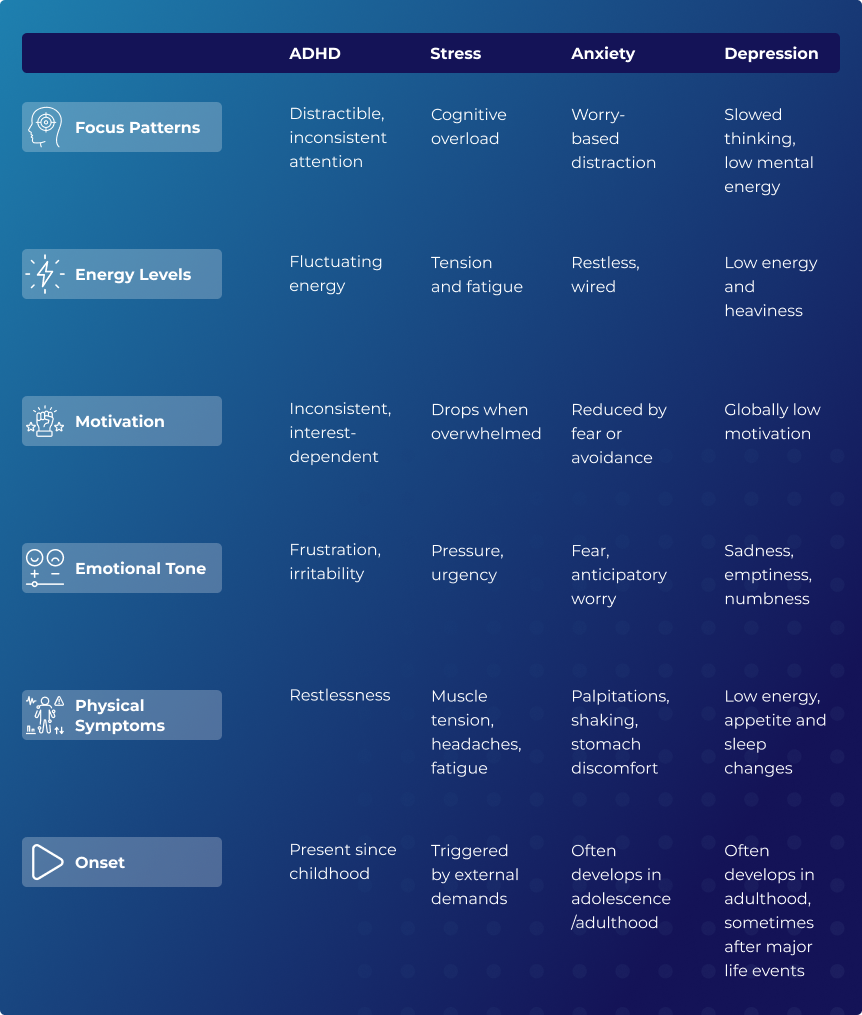
These differences form a useful starting point, although a formal diagnosis requires clinical evaluation. A structured assessment ensures that symptoms are understood in context and that treatment aligns with the individual’s needs.
Why These Conditions Often Overlap
Many adults experience more than one condition at the same time, which can make recognition more complicated.
ADHD increases vulnerability to chronic stress because everyday tasks often require more effort and organisation. This added demand can lead to emotional fatigue, reduced resilience, and a sense of ongoing overload. Anxiety often develops as a secondary response when ADHD remains unmanaged, as individuals frequently worry about missed details, performance issues, or unpredictable outcomes in daily life. Depression can develop after long periods of struggling without clear explanation or appropriate support. When someone attributes their difficulties to personal inadequacy rather than an underlying neurodevelopmental condition, the emotional impact can be considerable. Chronic stress also influences the brain systems responsible for attention, memory, and mood, further blurring the distinction between different conditions.
When two or more difficulties occur together, symptoms can intensify or mask one another, creating a more complex clinical picture. If you choose to explore support through a private health clinic, the London Lauriston Clinic is a setting where experienced clinicians can identify the primary cause and guide more targeted treatment.
How to Distinguish the Root Cause
A few guiding questions can help clarify the possible underlying cause of symptoms:
1. When did symptoms start?
ADHD symptoms are present from childhood, even if they were overlooked, masked, or managed through coping strategies. In contrast, stress, anxiety, and depression tend to emerge later and are often linked to identifiable pressures, emotional events, or significant changes in circumstance.
2. Do symptoms change with structure or rest?
ADHD symptoms persist regardless of holidays, time off, or reduced obligations. They may become more manageable with structure, but they do not resolve with rest. Stress-related symptoms usually improve when pressures reduce. Anxiety and depression fluctuate with emotional states, external triggers, and overall mental wellbeing.
3. Are they tied to worry, sadness, or specific triggers?
Anxiety is closely tied to worry and fear-based thinking. Depression centres on low mood, loss of pleasure, and reduced motivation. Stress is linked to external demands or situations that exceed coping capacity. ADHD is less connected to emotional triggers and more related to executive functioning differences such as planning, organisation, and working memory.
Clinicians also consider how symptoms present across different settings, any family history of mental health or neurodevelopmental conditions, and any previous episodes.
Self-diagnosis can be misleading because these conditions share surface-level behaviours despite having different underlying mechanisms. A structured assessment in a specialist clinic, particularly one with experience in neurodevelopmental evaluation, can provide a clearer and more accurate understanding.
Evidence-Based Treatment Paths
Treatment approaches differ depending on the condition, and recognising the correct underlying cause allows for more targeted and effective support.
Support for ADHD
Support for ADHD may include medication that improves focus, attention regulation, and executive functioning. Behavioural therapy, coaching, and structured organisational strategies can help individuals build routines, manage time, and reduce overwhelm. Early identification can significantly reduce the emotional and practical strain that often accumulates when symptoms go unrecognised for many years.
Treatment for Stress
Treatment for stress focuses on reducing unnecessary demands, improving coping skills, establishing healthy boundaries, and encouraging rest and recovery. Lifestyle adjustments, such as improved sleep habits, physical activity, and changes to workload, can be particularly beneficial because stress is strongly influenced by environmental pressures. Supporting the body’s stress response system helps prevent chronic strain and reduces the risk of more complex emotional difficulties developing over time.
Managing Anxiety Symptoms
Anxiety is often treated with cognitive behavioural therapy, which helps individuals identify and change worry-driven thought patterns. Gradual exposure strategies and mindfulness-based approaches can reduce hyperarousal and improve emotional resilience. Depending on severity, some people benefit from medication to stabilise symptoms.
Treatment for Depression
Treatment for depression typically involves therapy aimed at improving emotional processing, increasing activity levels, and restoring routine. Behavioural activation is particularly important because engagement with meaningful activities helps counteract low mood. In some cases, medication may be recommended, especially when symptoms significantly affect daily life. Supporting sleep, nutrition, and physical wellbeing forms an important part of recovery.
In more complex situations, multidisciplinary support is especially valuable. The London Lauriston Clinic provides access to psychiatry, psychological therapy, and neurodevelopmental assessment. This integrated approach ensures that adults receive personalised, evidence-based care rather than a one-size-fits-all treatment plan.
When to Seek Professional Help
Adults should consider seeking support when symptoms begin to interfere with work, relationships, daily functioning, or overall wellbeing. Warning signs include increasing avoidance, persistent low mood, panic attacks, prolonged worry, and noticeable difficulties with organisation or decision-making. Significant executive dysfunction, such as chronic forgetfulness or an inability to complete essential tasks, can also indicate that professional guidance is needed.
Many people delay seeking help because they feel uncertain whether their symptoms are serious enough or fear that they may be overreacting. In reality, early input can prevent long-term complications, reduce distress, and improve quality of life.
Private health clinics provide an environment where concerns are treated with care and specialist assessment is more accessible. This can be especially valuable for adults who have spent months or even years trying to make sense of their symptoms without a clear explanation. In these settings, a well-supported diagnosis provides reassurance, direction, and a strong foundation for choosing the most suitable interventions.
A psychiatrist or a clinician trained in neurodevelopmental assessment can distinguish between ADHD, mood disorders, and anxiety disorders. At the London Lauriston Clinic, assessments are carried out by clinicians experienced in adult neurodevelopment, which supports a high standard of diagnostic accuracy.
What to Expect During an Assessment
An assessment typically includes a detailed clinical interview, developmental history, evaluation of symptoms over time, and standardised questionnaires. It may also explore mood, anxiety, and stress-related factors to rule out other potential explanations.
The purpose is to understand the full clinical picture rather than focus on isolated behaviours. By examining patterns across development, context, and emotional wellbeing, clinicians can differentiate between neurodevelopmental conditions, mood disorders, and stress-related presentations.
FAQs About ADHD vs Stress, Anxiety, and Depression
How can I tell if my symptoms are caused by ADHD or stress?
ADHD symptoms are long-standing, present since childhood, and consistent across different situations, even if they were previously masked. Stress is linked to identifiable pressures such as workload or family demands, and symptoms usually ease when those pressures reduce. ADHD continues regardless of external circumstances and often involves persistent difficulties with organisation, time management, and sustained attention. A structured assessment at the London Lauriston Clinic can help clarify the difference.
Why do ADHD, anxiety, and depression often feel so similar?
These conditions influence the same brain systems responsible for attention, motivation, and emotional regulation, which is why their symptoms often overlap. Anxiety disrupts focus through persistent worry, while depression lowers motivation and slows thinking. ADHD affects executive functioning and task regulation regardless of mood. Because the behaviours look similar on the surface, self-diagnosis is difficult.
Can adults develop ADHD later in life?
No, ADHD does not begin in adulthood; it is a neurodevelopmental condition present since childhood. Many adults only recognise the symptoms later because they previously compensated for difficulties or had environments that masked them.
Does chronic stress make ADHD symptoms worse?
Yes. Chronic stress can significantly intensify ADHD-related difficulties. When the body is under prolonged pressure, cognitive load increases and the brain becomes less efficient at managing attention and planning. Adults with ADHD often report more forgetfulness, irritability, and reduced emotional tolerance during stressful periods.
What signs suggest anxiety rather than ADHD?
Anxiety is driven by persistent worry and fear-based thinking. People often experience racing thoughts, muscle tension, and avoidance of stressful situations. ADHD follows a different pattern, with attention shifting quickly and impulsivity or forgetfulness appearing even when the person is not worried. If intrusive worries sit at the centre of your difficulties, anxiety is more likely the primary cause.
How does depression affect concentration and motivation?
Depression reduces energy, interest, and emotional drive, which makes it harder to begin tasks, maintain focus, or make decisions. Thinking often feels slowed or heavy, unlike ADHD, where thoughts tend to be active but inconsistent. When concentration problems are accompanied by low mood, fatigue, or a loss of enjoyment, depression is a more likely explanation than a neurodevelopmental condition.
Can ADHD, anxiety, and depression happen at the same time?
Yes. These conditions often coexist. ADHD can place long-term strain on concentration, organisation, and emotional regulation, which increases the risk of anxiety and low mood. Anxiety may develop from ongoing worry about performance, while depression can emerge after years of feeling unsupported or misunderstood.
Conclusion
ADHD, stress, anxiety, and depression share several overlapping features, yet each condition has distinct patterns that become clearer with structured, specialist assessment. Understanding these differences helps adults access the right support and move forward with confidence.
If you are unsure whether your symptoms relate to ADHD or reflect the effects of stress, anxiety, or depression, a professional evaluation can offer the clarity you need. The London Lauriston Clinic provides comprehensive assessments across its specialist psychiatry services, helping individuals understand the root cause of their difficulties and receive evidence-based guidance tailored to their needs.
Clarity at the end of the diagnostic process provides the foundation for meaningful progress. Many adults discover that a neurodevelopmental assessment is key to understanding lifelong patterns and finding the right interventions.